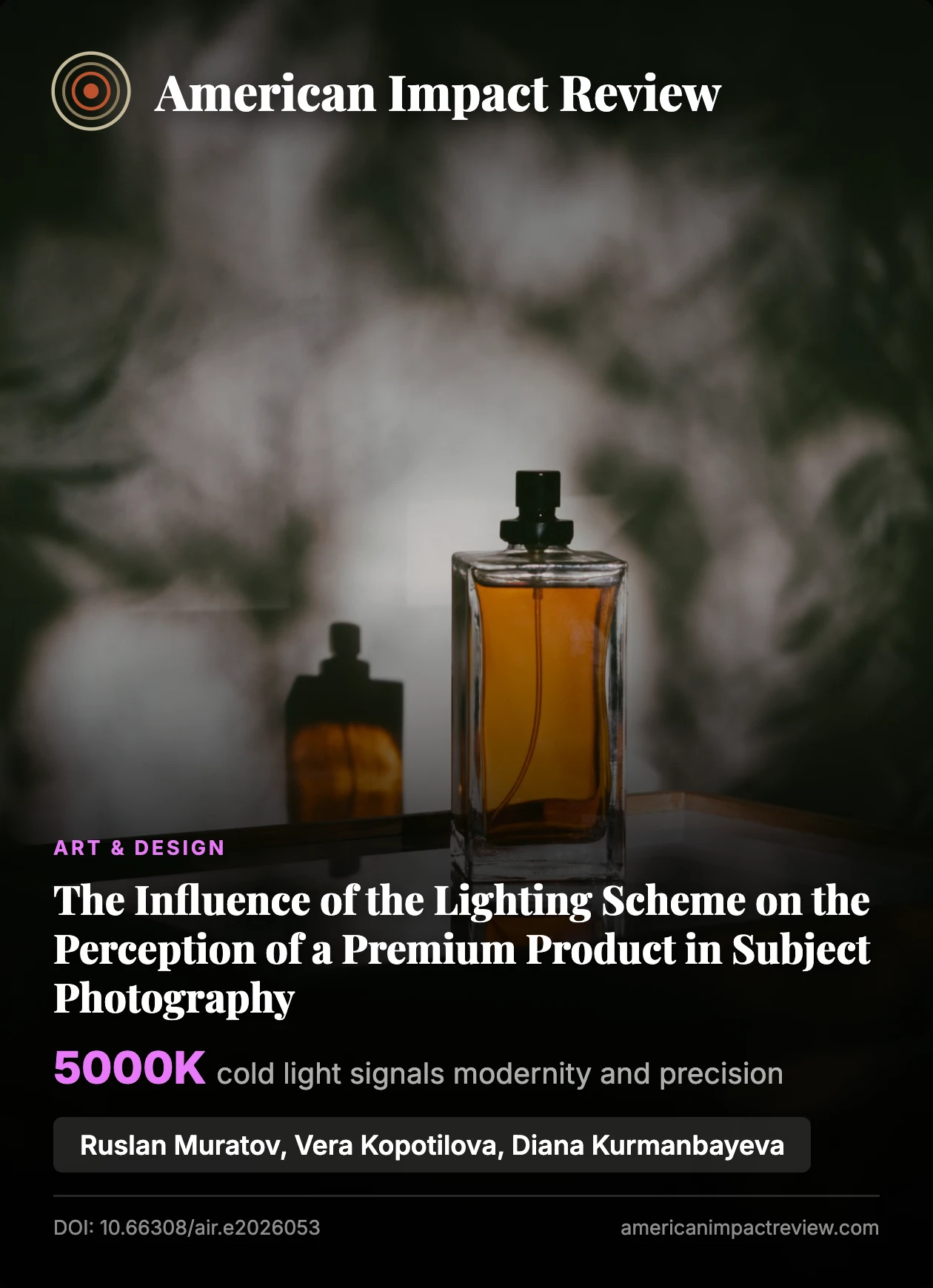
The Influence of the Lighting Scheme on the Perception of a Premium Product in Subject Photography
Abstract
This article examines how different lighting schemes can affect the perception of a premium product in subject photography. In particular, key types of lighting, such as hard and soft light, contour light, fill light, and others, are being investigated, as well as their effect on the visual perception of various materials, textures, and shapes. Special attention is paid to techniques and light modifiers that allow you to control glare, shadows, and contrast to create a premium effect. Practical examples of photographing various categories of goods are given, vividly demonstrating how the choice of a lighting scheme can evoke associations from "budget" to "premium" perception in the viewer. The article also describes typical errors in the setting of light, which can reduce the perception of the value of the product. In addition, the relationship between the lighting scheme and the overall brand strategy is shown: how lighting can help convey the key values of a brand. The practical value of this work lies in the fact that it provides photographers, marketers, and brand managers with specific recommendations on the use of light, which will help strengthen the premium positioning of the product on a visual level.
Keywords: subject photography, lighting scheme, premium product perception, light modifiers, visual branding, commercial photography